Trump's quick hits allow for AFRICOM comeback on continent
Trump's quick hits allow for AFRICOM comeback on continent
Donald Trump’s foreign policy features chaotic decision-making and bombastic rhetoric. But some of his half-baked ideas could have lasting consequences, creating escalation pathways that his successors may be unwilling to close.
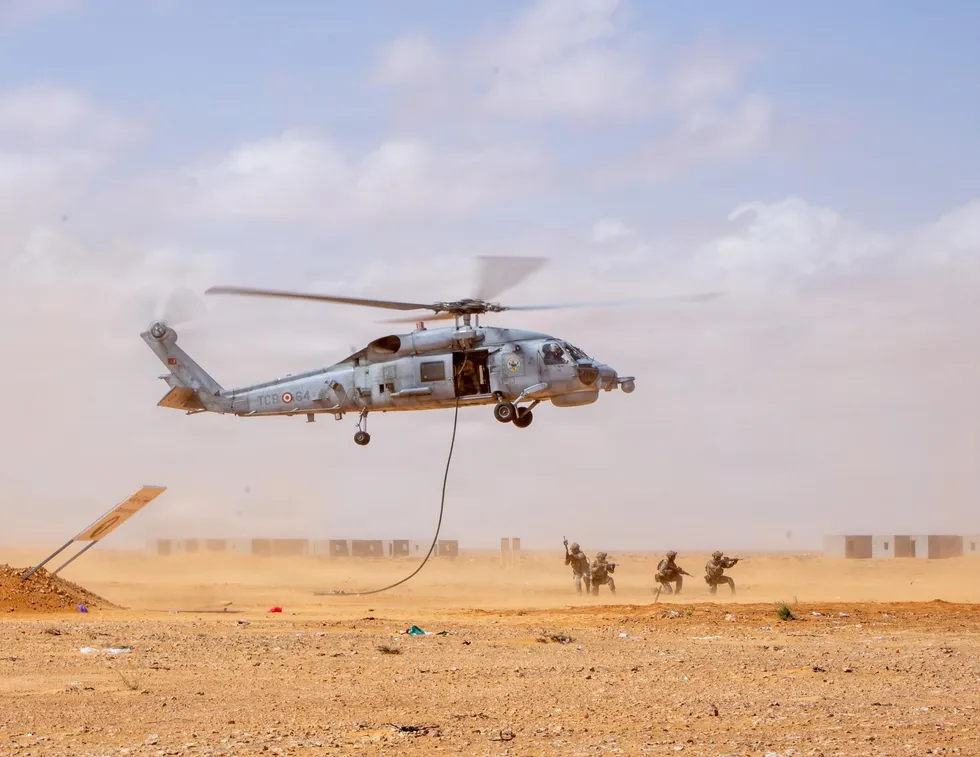
West Africa provides a crucial case study. Trump ordered strikes in Nigeria in December 2025 and May 2026, and his team has reportedly considered striking Mali. These moves are drawing West Africa deeper into the ceaseless “War on Terror.” U.S. Africa Command (AFRICOM) – which was rumored to be on the chopping block early in Trump’s second term – may emerge from these years as a bureaucratic winner, with dangerous implications for the future.
West Africa has always been part of the War on Terror, but with limitations. After 9/11, as Washington argued that further threats were likely to emerge from geopolitical peripheries, the Bush administration created the Pan-Sahel Initiative, a counterterrorism training program. The broader Trans-Sahara Counterterrorism Partnership followed in 2005, and then AFRICOM in 2007.
None of those programs forestalled the crises they were meant to prevent. In 2009-2010, the Boko Haram sect in Nigeria transformed into a mass insurgency that continues to trouble that country today. In 2012, a rebellion in Mali produced the first large-scale jihadist takeover in West Africa and gave way to a multi-sided war that still roils the Sahel.
Amid those developments, the U.S. avoided direct and overt confrontation with jihadists in West Africa but stepped up its involvement there: the U.S. logistically supported France’s intervention in Mali in 2013; increased its engagement with militaries in Nigeria and the Lake Chad Basin, particularly after Boko Haram’s infamous 2014 kidnapping of nearly 300 schoolgirls; and constructed a $100 million drone base in Niger starting in 2016, from which it conducted surveillance flights.
Occasional scandals and shocks – the strangling of a U.S. Green Beret in Mali in 2017 by his colleagues, and a jihadist ambush that killed four American soldiers and five Nigeriens in Niger the same year – hinted at more “kinetic” U.S. presence in the region than was officially acknowledged. Yet in the Sahel and Nigeria, the U.S. avoided the kind of cyclical strikes that unfolded in Somalia, Yemen, Libya, and elsewhere.
Trump’s moves in Nigeria and potential moves in Mali are breaking down longstanding limits on applications of U.S. military power in a delicate region. For Trump, short-term political expediency may be a driver of these decisions. Striking Nigeria in the name of defending Christians caters to significant constituencies and organizations in the United States. Boasting that U.S. forces killed “ISIS Terrorist Scum” reinforces Trump’s brand of toughness. The president and his political appointees may not have a long time horizon in mind.
But these short-term decisions, intermittent strikes, and leaked debates over opening new fronts all have long-term implications – especially for AFRICOM and for overall U.S. counterterrorism policy. Early last year, amid the Trump team’s initial fervor for cutting and
Part of an ongoing event
Russia-Ukraine War