The Helsinki Commission is a Cold War relic that needs to go
The Helsinki Commission is a Cold War relic that needs to go
Every government institution should periodically be asked a simple question: is it still performing the mission for which Congress created it?
That principle has become a hallmark of the Trump administration. Through the Department of Government Efficiency (DOGE), the closing of USAID, and the restructuring of federal agencies, the administration has encouraged the reexamination of longstanding institutions to ensure they remain faithful to their original purposes.
That question should now be asked of one of Washington's least scrutinized congressional bodies: the U.S. Helsinki Commission.
Congress established the U.S. Helsinki Commission in 1976, one year after the signing of the Helsinki Final Act, the culminating political agreement of the Conference on Security and Co-operation in Europe (CSCE). The CSCE was a landmark diplomatic process that brought together the United States, Canada, the Soviet Union, and virtually every European nation at the height of the Cold War. The CSCE later evolved into today's Organization for Security and Co-operation in Europe (OSCE).
The Helsinki Final Act established a political framework intended to reduce East-West tensions by promoting military transparency, economic cooperation, and respect for fundamental human rights. Congress established the U.S. Helsinki Commission as the United States' oversight body for monitoring implementation of the Helsinki Final Act. Today, members of the commission also serve as the U.S. delegation to the OSCE Parliamentary Assembly, linking the commission directly to the broader institutional framework that grew out of the Helsinki process.
There’s just one problem: the Cold War ended more than three decades ago, and the Soviet Union no longer exists. Yet the organization — and its $3 million annual budget — have continued trudging along. The question today is not whether the commission once served an important purpose. Rather, it is why Congress has allowed it to continue operating beyond the mission for which it was originally created.
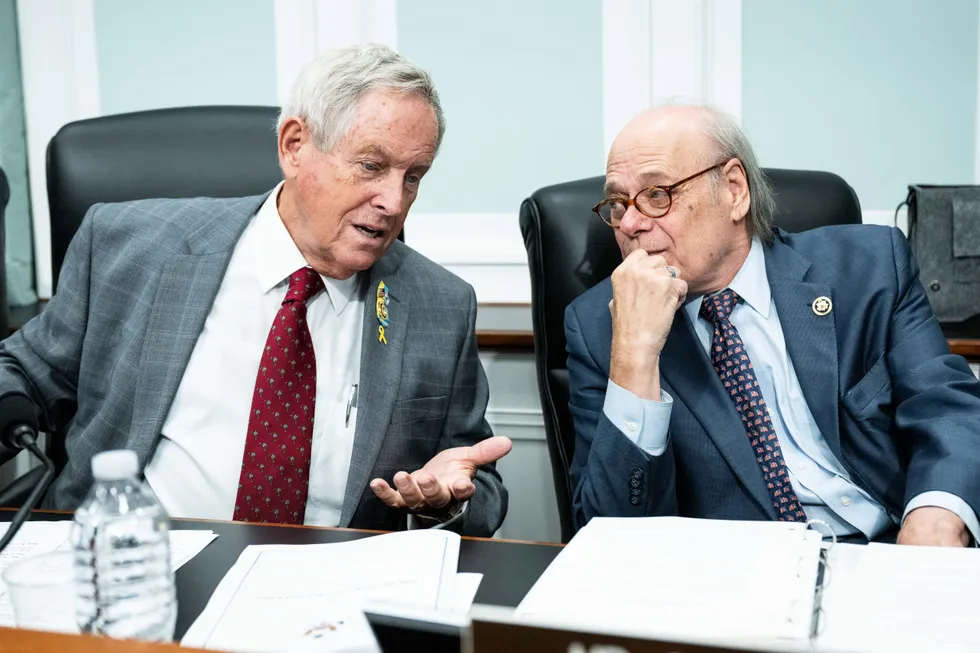
The commission's sustained and biased focus on the country of Georgia over the past several years illustrates why that question deserves serious attention. Most recently, at its 33rd Annual Session on July 8, 2026, the OSCE Parliamentary Assembly adopted the “Resolution on Upholding Election Integrity and Fundamental Freedoms in Georgia.” Sponsored by Rep. Joe Wilson (R-S.C.), co-chair of the U.S. Helsinki Commission, the resolution was a political attack on Georgia's elected conservative government, exemplifying the kind of institutional overreach that has increasingly come to characterize the U.S. Helsinki Commission.
This stands in stark contrast to the Trump administration’s approach. On July 16, 2026, Secretary of State Marco Rubio welcomed Georgia's vice prime minister and foreign minister, Maka Botchorishvili, to Washington to participate in a high-level ministerial meeting alongside representatives from more than sixty nations. One day later, President Donald Trump wrote directly to Prime Minister Irakli Kobakhidze, expressing appreciation for Georgia's friendship and affirming his desire to strengthen U.S.-Georgia cooperation in support of sovereignty, security, and lasting prosperity. Yet during this same period, Congressman Joe Wilson was helping advance a resol