Will Trump meet his Suez moment & seize Hormuz deal on the table?
Will Trump meet his Suez moment & seize Hormuz deal on the table?
Oman and Iran appear close to a temporary arrangement to reopen the Strait of Hormuz, potentially providing both an exit from the current round of fighting and the foundation for a more durable maritime order. Washington should welcome such an agreement—even if it acknowledges a degree of Iranian authority in administering traffic through the strait—because US interest dictates that open and non-discriminatory passage must be given priority over control.
The emerging formula would reportedly divide responsibility for the shipping lanes. Vessels entering the Persian Gulf would travel through waters administered by Iran, while outbound traffic would pass through an Omani-administered route. Iran would be notified of departing vessels and, while this has not yet been discussed, Tehran appears open to also ensuring that Oman would be notified of incoming traffic. Tehran and Muscat may collect and share fees for specified security and environmental services, although this sensitive issue has not yet been settled. The negotiations remain fluid, and any agreement is reportedly linked to the lifting of the American blockade on Iranian ports.
The arrangement would represent a slight climbdown by Tehran. Iran’s earlier position would have required traffic in both directions to pass through some portion of Iranian waters as well as Omani waters. That would have brought even ships already inside the Persian Gulf under an Iranian-administered transit system. The emerging division of lanes would give Oman primary responsibility for outbound shipping and limit the universe of vessels requiring Iranian approval or coordination.
If successful—and if Washington accepts it—the agreement could help end the present fighting. It remains unclear whether that would restore the previous American-Iranian memorandum of understanding or require a new framework. Nor does it in and of itself move the needle on two other major stumbling blocks: Iran’s demand for a regional ceasefire and Washington’s demands on Iran’s nuclear activities.
The Trump administration will likely receive strong pushback from hawkish elements in Washington and Israel who will complain over the arrangement’s de facto acceptance and legitimization of Iran (and Oman’s) management of the Strait.
But this critique is borne out of a confusion of what the US’s actual core interest in the Strait is: The free and predictable flow of commerce or preventing the ability of a hostile power to assert control.
The Trump administration has increasingly framed the objective as preventing Iran from “controlling” the strait. Yet the central American interest in strategic waterways has historically been less about who administers them than about whether ships can pass through them freely, predictably and without discrimination. Preventing a hostile state from acquiring coercive leverage has generally been a means of preserving passage, not an end that supersedes passage itself.
That hierarchy of interests matters. If reopening the strait requires acknowledging that Iran possesses some capacity to regulate traffic in waters along its coast, Washington should not reject an agreement merely because it fails to preserve the appearance of unqualified American dominance.
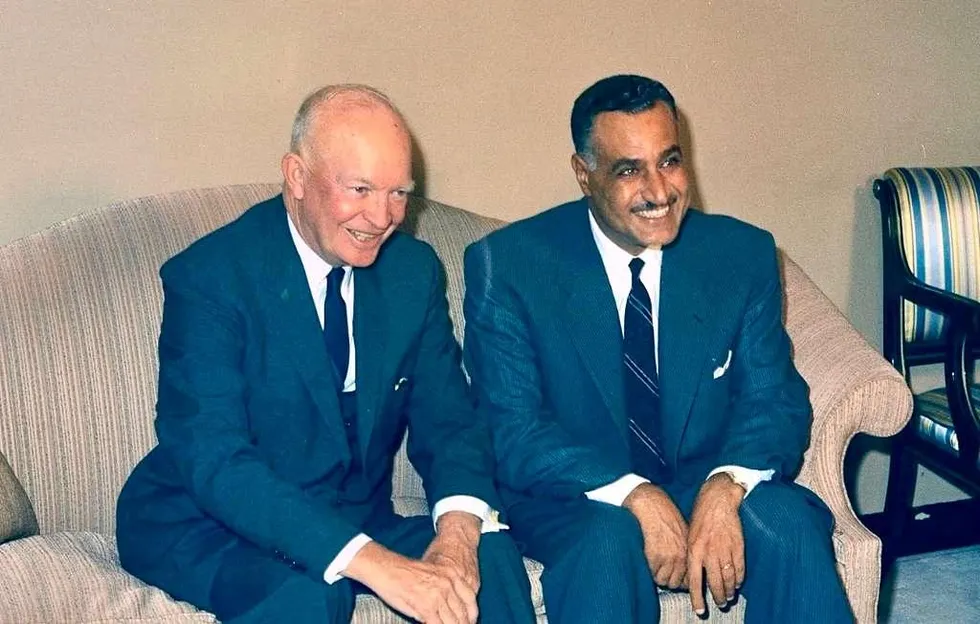
The Suez crisis provides the clearest example. In 1956, Egypt’s president, Gamal Abdel Nasser, nationalized the Suez Canal Company, displacing the British- and French-controlled corporation that had operated one of the world’s most important commercial arteries. Britain and France regarded nationalization not merely as an economic injury but as a strategic humiliation and, together with Israel, invaded Egypt.
President Dwight Eisenhower refused to support them. After rejecting the Anglo-French invasion, Eisenhower’s administration did not make restoration of British or international ownership a condition for accepting Egypt’s continued administration of the canal. I
Part of an ongoing event
Israel-Hamas Conflict