There’s No Time for Centrists to Be Doomers About About El-Sayed’s Victory
There’s No Time for Centrists to Be Doomers About About El-Sayed’s Victory
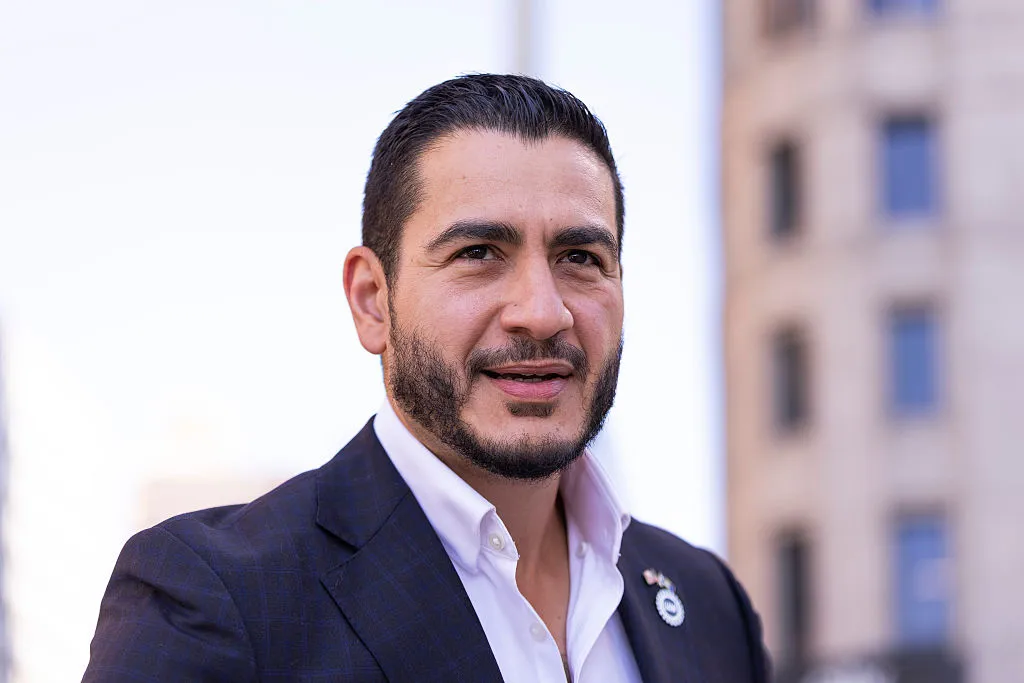
Michigan Democratic Senate primary winner Abdul El-Sayed arrives to a press conference in front of the Spirit of Detroit statue on Aug. 5, 2026, in Detroit. Photo: Finn Gomez/Getty Images
Abdul El-Sayed is the Democratic Party’s nominee for the Senate in Michigan after besting Rep. Haley Stevens by less than 1 percentage point. Not long after The Associated Press called the race on Wednesday morning, Stevens threw her “full support” behind El-Sayed. While the votes were still being counted on Tuesday night, state Sen. Mallory McMorrow — who had dropped out of the running in July — also endorsed her former opponent, acknowledging that despite a “brutal” primary race, what is most important now is to head into November as a “unified party.”
What remains to be seen is whether moderates and Democratic Party pundits will follow suit, get on board, and vote blue no matter who.
But centrists seem more interested in saving face than a Senate majority. Complaining that primary voters picked the candidate more likely to lose on Election Day has become a face-saving tactic for moderates as they’ve watched their preferred picks lose against upstart insurgent campaigns like El-Sayed’s.
Related Abdul El-Sayed Beats the Democratic Establishment and AIPAC in Michigan
Among them are The Atlantic’s Jon Chait, who’s never met a progressive candidate he won’t sneer at. In typical form, Chait concern-trolled last weekend over the potential that Democrats would lose Michigan’s Senate seat by picking the charismatic El-Sayed over Stevens.
“Is there a single el-Sayed supporter with enough self-awareness to admit they’re willing to accept a higher risk of defeat to elect a left-wing candidate?” Chait asked on X, citing polling showing Republican former Rep. Mike Rogers with a slight but consistent lead in the Senate race just outside the margin of error
A more honest commentator might have pointed out that El-Sayed beat back an establishment campaign with tens of millions of dollars behind it: a staggering $62 million poured into the state to boost Stevens, half of it from AIPAC, giving her and her allies a 9-to-1 spending advantage over El-Sayed. But honesty has seldom been important for Chait’s left-bashing.
Making sure donors and power brokers are confident their interests are still being represented fuels how some party hacks are waging war against the left flank.
By Wednesday morning, Chait had once again reframed the race, this time as a key battle in an existential war for liberalism. He groused variously about the streamer Hasan Piker, who campaigned for El-Sayed; democratic socialism; and James Carville.
“The left has played down every success by the establishment while forcing it to own every failure,” he wrote in The Atlantic. “This dynamic points to a broader asymmetry between the two factions. The mainstream liberals of the Democratic Party have focused their energies on defeating Republicans. The left-wing faction has focused on defeating them.”
Chait certainly understands that this is how power is accumulated in the Democratic Party but is upset that, for once, it’s not benefiting his wing.
He wasn’t alone. Matt Yglesias — the ubiquitous blogger whose self-styled branding as a sensible, middle