Data Centers Divide Democrats in Michigan Primary
Data Centers Divide Democrats in Michigan Primary
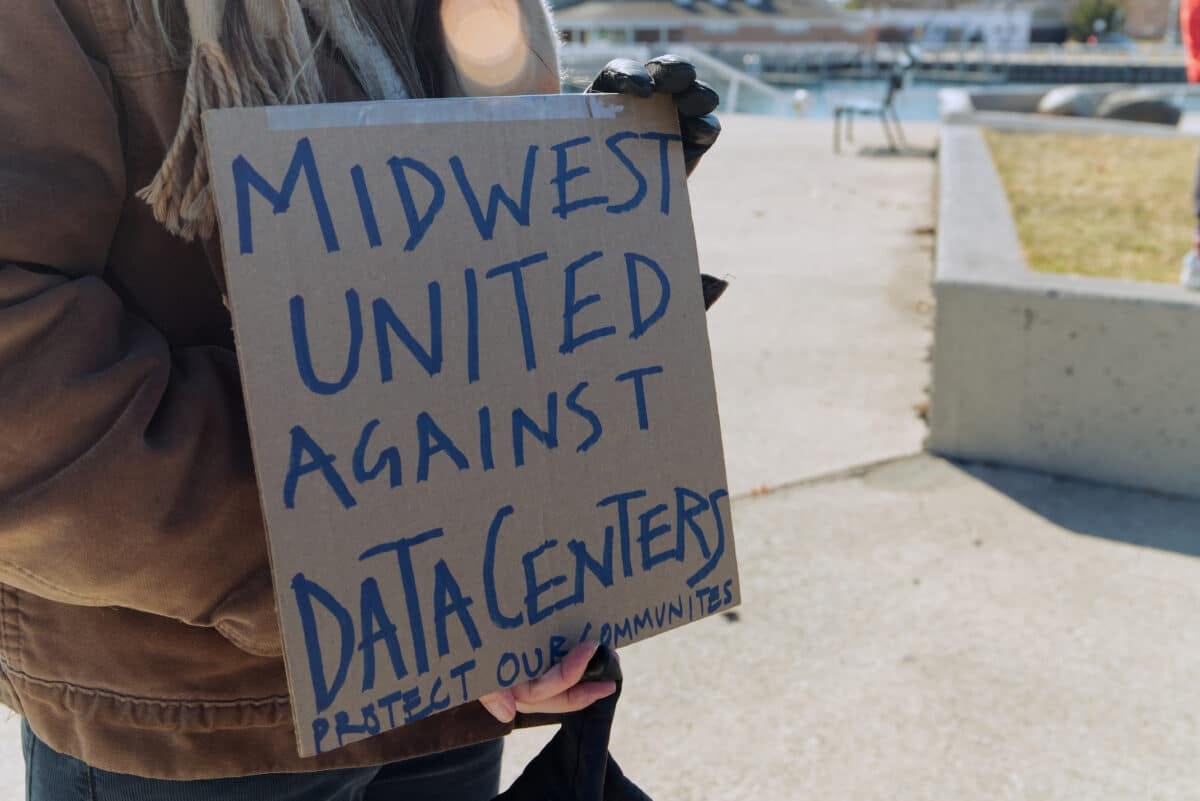
The article below is part of Drop Site’s ongoing collaboration with Barn Raiser Media to put a focus on rural politics (barnraisingmedia17744.activehosted.com) with a newsletter running through November.SIGN UP HERE (barnraisingmedia17744.activehosted.com) (substackcdn.com)A demonstrator at an April rally in Traverse City, Michigan, holds a sign emblematic of the growing data center resistance. (Miles MacClure)Story by Miles MacClureOver the past year, dim, windowless, gargantuan warehouses have taken center stage in rural Michigan. The data centers draw ire for consuming vast energy resources to fuel an artificial intelligence boom viewed with increased skepticism. They have spiked utility bills, guzzled the region’s fresh water, occupied large tracts of land, and emitted a hum so constant that some residents have sued over excessive noise.The projects have sparked renewed civic engagement in rural areas and small towns—stories that inspire David and Goliath comparisons. Residents ignite with fury upon finding out their local elected officials have made deals in the dark to bring data centers to town. They come out in force to city council meetings, zoning hearings, and protests in an effort to confront the power of major utility companies and multinational tech corporations with billions of dollars at their disposal.This growing opposition has forced Michigan’s elected officials to reconsider the wisdom of the state’s 2024 decision to hand out tax breaks to data center constructors.Abdul El-Sayed, an epidemiologist and former Wayne County public health official running in the August 4 Democratic primary for U.S. Senate, told Barn Raiser that the corporations building data centers aren’t straightforward about their development plans.“There’s been so little transparency on the part of the corporations themselves and the part of the utilities,” he said. “It has raised the hackles of folks who’ve learned not to trust a lot of these bigger corporations when they tell them everything’s going to be okay.”El-Sayed is locked in a fierce contest that has accentuated divides within the Democratic Party. El-Sayed, whose parents immigrated from Egypt, has pledged not to accept corporate PAC money, has called for eliminating arms sales to Israel and supports universal health care and abolishing Immigration and Customs Enforcement (ICE). Rep. Haley Stevens (D-Mich.) is a vocal supporter of Israel who has accepted money from corporate PACs, outside groups like the American Israel Public Affairs Committee (AIPAC) and has the support of Democratic party leader Sen. Chuck Schumer. Michigan state Sen. Mallory McMorrow, a third challenger in the race, suspended her campaign July 5.An April Emerson College poll shows data centers could be among the deciding issues in the election. Emerson’s poll of 519 likely Michigan primary voters found that a majority, or 55%, opposed data centers being built in or near their community, versus 27% who supported them. Opposition to data centers was much higher among likely Democratic primary voters, with 63% opposed versus 45% among likely Republican primary voters.Dark money spending and support for Israel remains another flashpoint in the campaign, gaining national attention. The Associated Press reported (apnews.com) AIPAC and its affiliated groups have spent close to $30 million backing Stevens, which is their largest investment ever in a single race.In January, El-Sayed released a terms of engagement proposal (abdulforsenate.com › datacenters) for data centers, which includes a guarantee for local jobs, a freeze on consumer electricity rate h
Part of an ongoing event
Israel-Hamas Conflict