Trouble in Paris? There's a Gaullist cure for that American hubris
Trouble in Paris? There's a Gaullist cure for that American hubris
Last month, as world leaders prepared to gather in France for the G7 Summit, French officials had Donald Trump on the mind.Using its privileges as host, Paris worked diligently to avoid any hiccups that might upset the U.S. president. First, it delayed (politico.eu) the meeting from June 14 to June 16, ensuring that it wouldn’t interfere with Trump’s 80th birthday celebration, or the cage match on the White House lawn that accompanied it. Then, French President Emmanuel Macron went “out of his way” to design an agenda to “appeal to the sort of things Trump wants,” as one analyst told (reuters.com) Reuters.Last, and perhaps most bizarrely, French officials delayed the ceremonial transfer of the remains of French Resistance hero Marc Bloch, who was set to be reinterred at France’s illustrious Panthéon in the heart of Paris on June 16. This decision was consequential; it meant that, instead of carrying out the ceremony on the anniversary of Bloch’s murder by the Gestapo in 1944, officials had to pay tribute a week later, delaying a national tribute of exceptional historical significance for one of France’s greatest historians and patriots.In the end, France ultimately gave up honoring Marc Bloch on the very day of his martyrdom in order to adjust its schedule to the imperious wishes of the White House and, ultimately, to welcome the U.S. president to nearby Versailles in an effort to curry favor with him.These decisions reflect a sorry state of mind. Even when it comes to our own national history, France has grown accustomed to treating constraints originating in Washington as overriding priorities. Yet nothing required the ceremony to be postponed or the agenda to be reshaped.
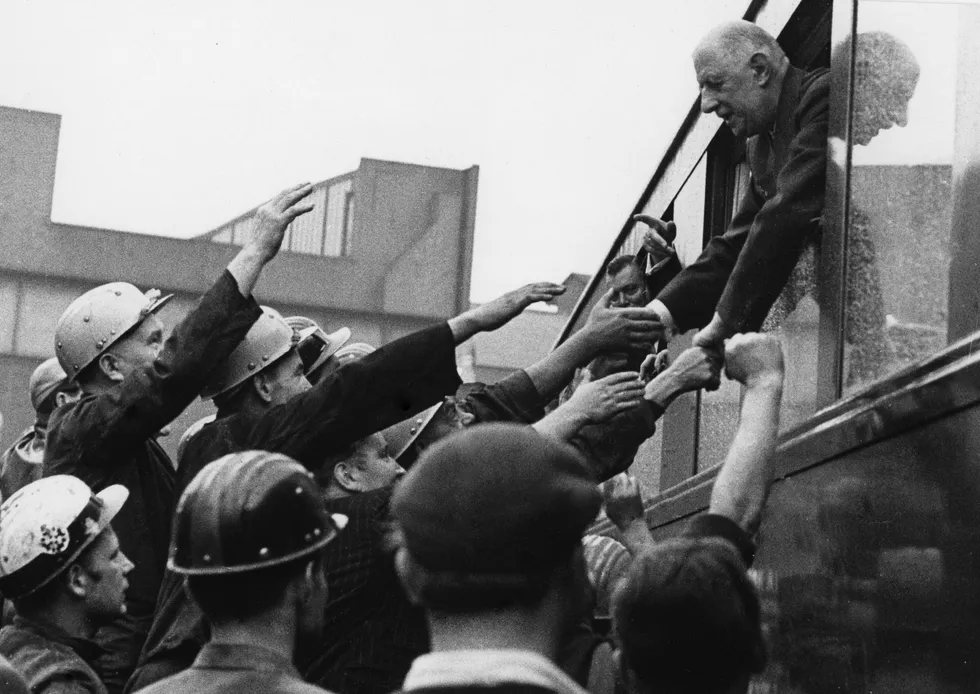
The relationship that should bind two great allied republics too often resembles one of political dependence, in which Paris is less concerned with defending its own interests and values than with deferentially anticipating Washington's wishes.This situation serves neither France nor the United States.A common misconception is that America's interests are best served by compliant allies who implement decisions made in Washington without question. That is the logic of empire, not of sovereign nations joined in partnership. The United States has far greater need of allies willing to speak candidly than of vassals eager to please, as recent history has repeatedly borne out.When Jacques Chirac's France refused to join the 2003 invasion of Iraq (en.wikisource.org), it was accused of betraying the Western alliance. With the benefit of hindsight, who can seriously argue that Paris was wrong? No weapons of mass destruction were ever found, nor any relationship between Saddam Hussein and al-Qaida. The war shattered the Iraqi state, fueled the rise of jihadist terrorism, strengthened Iran's regional influence, and cost American taxpayers trillions of dollars – not to mention the vast number of American and Iraqi lives lost.France's refusal was undoubtedly unwelcome in Washington. Yet it proved salutary. It served as a vaccine against hubris – a timely reminder that no power, however great, is immune to error. It also echoed the enduring lesson of Thucydides' “History of the Peloponnesian War”: no democracy can ultimately prevail abroad while violating the very principles it claims to uphold.It was precisely this lesson that General de Gaulle understood when, in his 1966 Phnom Penh speech, (americanrhetoric.com › charlesdegaullephnompenhspeech) he denounced the Vietnam War. He was not seeking to weaken the United States; he was trying to spare it a strategic disaster. He reminded Americans that no foreign army can indefinitely impose its will upon a people d
Part of an ongoing event
Russia-Ukraine War