India’s Cockroach Protests End as Modi Government Bows to Demands
India’s Cockroach Protests End as Modi Government Bows to Demands
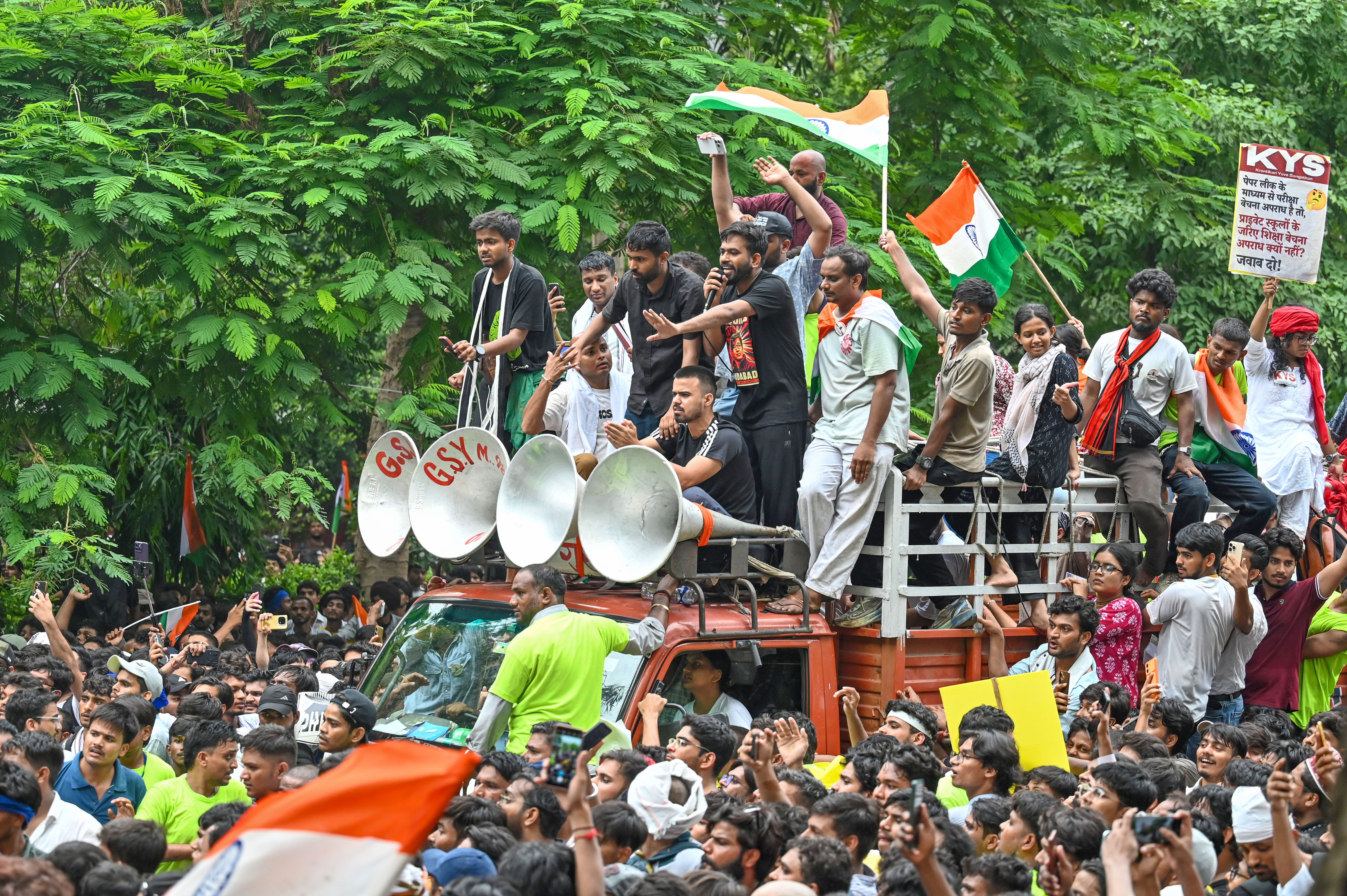
Drop Site is reader-funded — no corporate owners, no outside influence. Your support is what keeps this journalism independent and free. Please consider making a tax-deductible donation to support our work (givebutter.com › dsn substack).Subscribe now (dropsitenews.com › subscribe?) (substackcdn.com)Abhijeet Dipke, founder of the Cockroach Janta Party, speaks in a protest march towards Parliament from Jantar Mantar on July 20, 2026 in New Delhi, India. Photo by Sanchit Khanna/Hindustan Times via Getty Images.DELHI—Protesters occupying the central parts of Delhi, India were triumphant on Saturday evening after Prime Minister Narendra Modi’s government accepted all demands raised by the movement’s leaders, including the resignation of the country’s education minister Dharmendra Pradhan.The protest was spearheaded by the newly formed Cockroach Janta Party (CJP)—a wordplay on Indian Prime Minister Narendra Modi’s Bharatiya Janata Party (BJP). The word “cockroach” is attributed to the Chief Justice of India Surya Kant, who in May referred to the youth of the country as “cockroaches” during a court hearing.Ministers of the Modi government’s cabinet sat for talks with CJP representatives on Friday and Saturday. At the end of the talks on Saturday, the CJP announced that the government had agreed to all their demands.Accepting all the protesters’ demands was a rare surrender to popular dissent in Modi’s 12 years of being in power, during which the Hindu nationalist leader has built his image as a strongman that does not back down or take criticism kindly.“This is just the beginning of a larger movement that will restore basic governance and will work for the people of this country,” said Sauraav Das, a spokesperson for CJP.Hundreds of thousands of these cockroach protesters had been assembling for over a month at Jantar Mantar, which is less than half a mile south of Connaught Place, the central market in the heart of Delhi. They were demanding the resignation of Pradhan, who is also a senior leader in India’s ruling Bharatiya Janata Party, the party of Modi. The protesters at Jantar Mantar consider Pradhan to be responsible for failing to prevent “paper leaks”—the unauthorized release of highly competitive national college entrance examinations, often hours and sometimes minutes before the exam is due.The Jantar Mantar movement emerged in May in response to a leak of the National Eligibility cum Entrance Test (NEET), the countrywide medical entrance exam. Reports suggest at least a dozen students across the country died by suicide after the tests were canceled. Protesters claim the number is over 20. The protestor’s demand that the families of each of these students be paid ten million Indian rupees was accepted by the government on Saturday.After Delhi’s police and other armed forces cracked down heavily against protesters on Monday, the market became a pale shadow of its usual self. Traffic was redirected. And at least half a dozen metro stations around it were shut. Instead it was full with a young, Gen Z crowd who were there to register their dissent against the Modi government in growing numbers and spirit unseen in recent years.Betu Yadav, a 26-year-old post-graduate student from Uttar Pradesh was hit on the back of her head with batons by male police officers on Monday, leading to intense bleeding that required seven stitches. As news of the government agreeing to the demands emerged, Yadav, still wearing a bandage over her head, said that she can finally celebrate the fruit of her month-long struggle.“The fight that we fought has transformed into a big success. And today, on the 25th of July, Dharmendra Pradhan has resigned. Along with the resignation of