Rubio’s Paranoid Cuba Report Designed to “Justify a Military Attack on Cuba,” Says Democratic Rep.
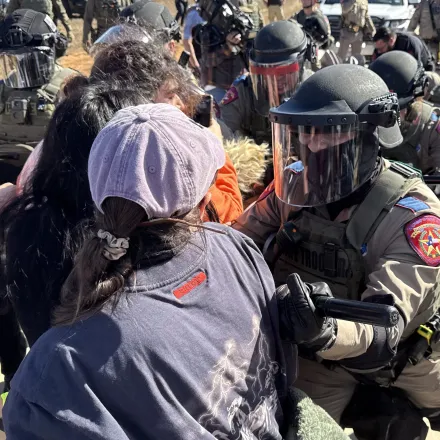
Rubio’s Paranoid Cuba Report Designed to “Justify a Military Attack on Cuba,” Says Democratic Rep.
A report published this week by the State Department is the latest weapon employed by the Trump administration in its campaign for aggressive intervention in Cuba, according to members of Congress and experts on the beleaguered Caribbean island nation.
Despite Cuba being severely hobbled by in the throes of a humanitarian crisis engineered by U.S. sanctions and fuel blockades (theintercept.com › cuba oil blockade trump rubio), the new report paints the country as a major threat.
The report appears to be the brainchild of Secretary of State Marco Rubio, a first-generation Cuban American who has made the overthrow of the Cuban government a top priority under the second Trump administration.
Published Monday without a listed author, the report (state.gov › cuba the capital of 21st century communism) says Cuba is the “capital of 21st century communism,” ideologically immovable, and a permanent enemy committed to the destruction not just of the U.S. but also of “Western civilization” through the spread of “Third Worldism.”
If that sounds like a throwback to the long-settled Cold War, that’s because it is — something critics of the report in Congress seized upon.
Whatever truths the report contains, they’re largely overshadowed by a feverish paranoia about the alleged reach of Cuban intelligence into American civil society, according to Rep. Mark Pocan, D-Wis., days after returning from a fact-finding trip to Cuba (ramirez.house.gov).
“It may be the stupidest, most fantastical, most biased thing I’ve ever read from a governmental agency,” Pocan said (pocan.house.gov › pocan reacts state departments cuba report) in a statement Tuesday. “This report focuses on the 1960s & 70s with no clear connection to today. Yet somehow, the State Department uses this report to say that this impoverished nation is responsible for everything from Black Lives Matter to Antifa, the anti-ICE protests and more.”
Rep. Delia Ramirez, D-Ill., who went on the fact-finding mission with Pocan, said the report was aimed at manufacturing consent for an invasion of the island — and to crack down on dissent at home.
“While criticizing the regime in Cuba, it instead attacks Americans’ constitutional rights to free speech and free assembly.”
“This report was intentionally designed to instill fear of the Cuban people and to justify a military attack on Cuba,” Ramirez told The Intercept. “It’s hypocrisy at its finest, because while criticizing the regime in Cuba, it instead attacks Americans’ constitutional rights to free speech and free assembly.”
In sketching a broad, anti-American conspiracy in nearly dozens of left-wing social movements, organizations, and educational institutions, the report also functions as a broadside on civil society in the U.S — and hardly for the first time.
“Cuba is not a new cudgel,” said Miriam Pensack, a historian at Princeton University specializing in Latin America and the Caribbean. “The Cuban revolution was a galvanizing event for the way that the United States thought about its national security, really until the end of the Cold War. And it still has an ideological utility, even as the country is limping along.”
Center of Global Conspiracy
Running 100 pages, the report lays out what its authors describe as a decadeslong effort by Cuba to foment revolutionary movements throughout the world and to build a latter-day “axis of evil” by allying with other governments opposed to U.S. interests, including the current-day governments of Iran, Russia, China, and North Korea.
“Even as it expands and revitalizes its network within the next generation of American left-wing activists, it has also forged new partnerships — or deepened and repurposed old ones — with other
Part of an ongoing event
Iran Crisis