Oman is cozying up to China as US throws Mideast into disarray
Oman is cozying up to China as US throws Mideast into disarray
Earlier this month, Chinese Vice Foreign Minister Miao Deyu met (al-monitor.com) with Omani National Security Council Secretary-General Idris Abdulrahman Al Kindi. The pair reaffirmed support for each other’s core interests, discussed deepening cooperation between the Belt and Road Initiative (cfr.org › chinas massive belt and road initiative) and Oman Vision 2040 (oman2040.om), and talked about regional security issues. During the visit, Al Kindi also met with Chinese Communist Party (CCP) official Jin Xin. Both sides expressed interest in expanding bilateral exchanges and cooperation, while Oman said it hopes to learn from the CCP’s governance experience and strengthen collaboration in trade, investment, industrial parks, and tourism.The meeting was notable for the level of representation. The participation of Oman’s National Security Council secretary-general suggested that bilateral engagement is expanding beyond trade toward political and strategic consultation. It also sent clear messages to Beijing that China is becoming a broader strategic partner, and to Washington that Muscat intends to preserve its foreign policy independence.“Oman survives by ensuring that no single relationship can hold its sovereignty hostage,” said Hamed S. Al Ghaithi, senior research associate at Country Risk Solutions, in an interview with RS, noting that diversification of partnerships is the “oldest instinct in modern Omani statecraft.”“What the war has done is convert a preference into a necessity,” he said.As tensions with Washington rise and the fallout from the Iran war reverberates across the Middle East, Oman is seeking greater strategic autonomy by diversifying its international partnerships. Its expanding relationship with China is a critical part of that agenda, as Muscat seeks to gain greater flexibility without abandoning its longstanding security ties with the United States. At stake is a fundamental question about the extent to which the U.S. will show flexibility to smaller states that seek to navigate among competing centers of power in an increasingly multipolar world rather than align exclusively with Washington. Oman, known for its independent foreign policy, has long balanced relations among regional states and global powers, embracing the role of a neutral mediator and partner. It is not seeking a grand pivot away from the West. But it is hoping to preserve strategic autonomy and strengthen its resilience in an increasingly multipolar world. Within this context, Oman’s relationship with China warrants particular attention.Diversifying without realignment
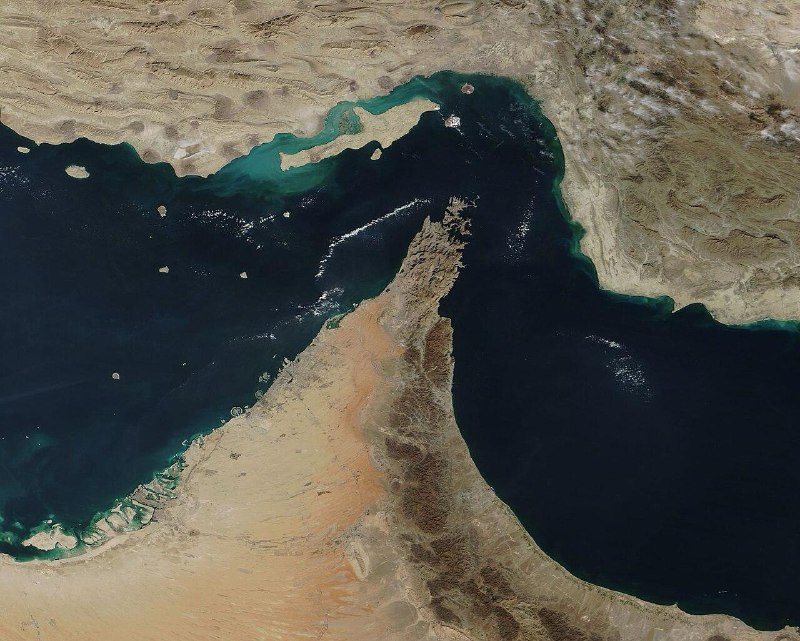
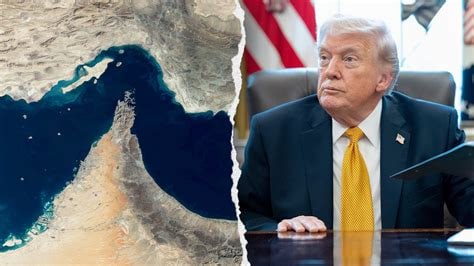
Recent events have reinforced Omani concerns about excessive dependence on Washington. Particularly concerning from Oman’s point of view were the Trump administration’s decision to sabotage Omani-facilitated diplomacy with Tehran in late February by launching a reckless war on Iran, as well as Trump’s subsequent threat (theguardian.com) to “blow up” Oman amid reports that Muscat was in talks with Tehran about imposing a joint toll on the Strait of Hormuz.“From Muscat’s perspective, a country that has acted for decades as a reliable mediator and maintained constructive relations with Washington should not be publicly threatened merely because it refuses to surrender its independent foreign policy,” said an Omani geopolitical analyst who spoke to RS on the condition of anonymity.“Oman is therefore likely to deepen relations not only with China, but also with European powers, India, Russia, and other Asian states. The objective is not to replace one dependency with another. It is to create a wider network of economic, diplomatic, technological, and security partnerships that gives Oman greater room to man
Part of an ongoing event
Iran Crisis