What a US war with Cuba would really look like
What a US war with Cuba would really look like
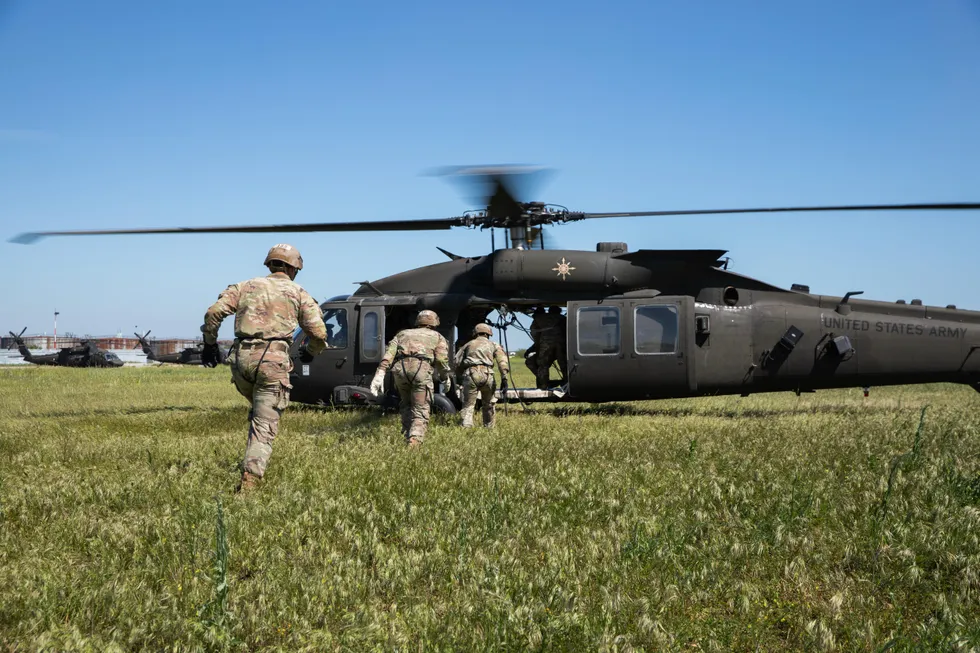
CBS News reported recently that Pentagon officials were exploring the possibility of military action against Cuba.“Military planners have in recent weeks examined a range of options for possible action against the island, including an Army-led air assault involving thousands of U.S. soldiers to be carried out by the 101st Airborne Division, the only unit trained for such a task,” according to the report (cbsnews.com › cuba military options pentagon).Only days later, the State Department released a 100-page report (state.gov › cuba the capital of 21st century communism) describing Cuba as a “unique threat” to U.S. national security, claiming Havana sought to “turn America against itself” and even “conquer” the United States. Some analysts (x.com) and commentators interpreted (truthout.org) the report as an effort to lay the political groundwork for possible military action.President Donald Trump has also repeatedly declared that he intends to overthrow Cuba's government, at one point saying that he might “stop by (vox.com › trump cuba regime change rubio)” the island after he was “finished” with the war in Iran.Experts who spoke with Responsible Statecraft cautioned that reports of military planning should not necessarily be interpreted as evidence that an intervention is imminent. Several said the recent rhetoric and reported contingency planning could just as easily reflect an effort to increase pressure on Havana. Should Washington ultimately decide to use force, they warned, any operation aimed at toppling the Cuban government would confront far greater military, political, and humanitarian risks than the administration's rhetoric suggests.Those risks extend well beyond the immediate military operation. A war in Cuba could trigger a migration crisis just 90 miles from Florida, create opportunities for other armed groups to exploit instability, and lead to a prolonged U.S. military occupation.While the recent CBS News report points to an "Army-led air assault" as one plausible scenario, what military action against Cuba might actually look like remains unclear. The administration could intensify pressure through a blockade; pursue an air campaign or decapitation strike intended to weaken the regime without occupying the island; or launch a ground invasion.Which path the administration ultimately pursues may depend largely on Washington's political objective. The more limited options could increase pressure on Havana but may prove insufficient if the goal is to overthrow the Cuban government. Yet the option most likely to achieve that objective — a ground invasion — is also the one experts who spoke with RS considered the least likely because of its enormous costs.The reports come amid a continuing humanitarian crisis on the island. Cuba has been under a de facto oil embargo (miamiherald.com › article316580456) since February, leaving the country victim (responsiblestatecraft.org › marco rubio cuba) to regular fuel shortages and blackouts.Mark Cancian, senior adviser at the Defense and Security Department at the Center for Strategic and International studies, says a continued blockade continues to be the most probable outcome. "It puts the regime under permanent pressure," Cancian, a retired Marine Corps Colonel, told RS. "But it can't force the regime to change."Lee Schlenker, a research associate with the Global South program at the Quincy Institute, said the potential blowback is one reason he remains skeptical that the administration is preparing to invade. The U.S. may not “need to use military tools because the economic warfare has been so devastatingly effective," Schlenker, who recent
Part of an ongoing event
Iran Crisis