ICC states decision on Karim Khan ‘inherently political’, says leading criminal law expert
ICC states decision on Karim Khan ‘inherently political’, says leading criminal law expert
Sondos Asem
William Schabas voices concern over the future of International Criminal Court and independence of next prosecutor
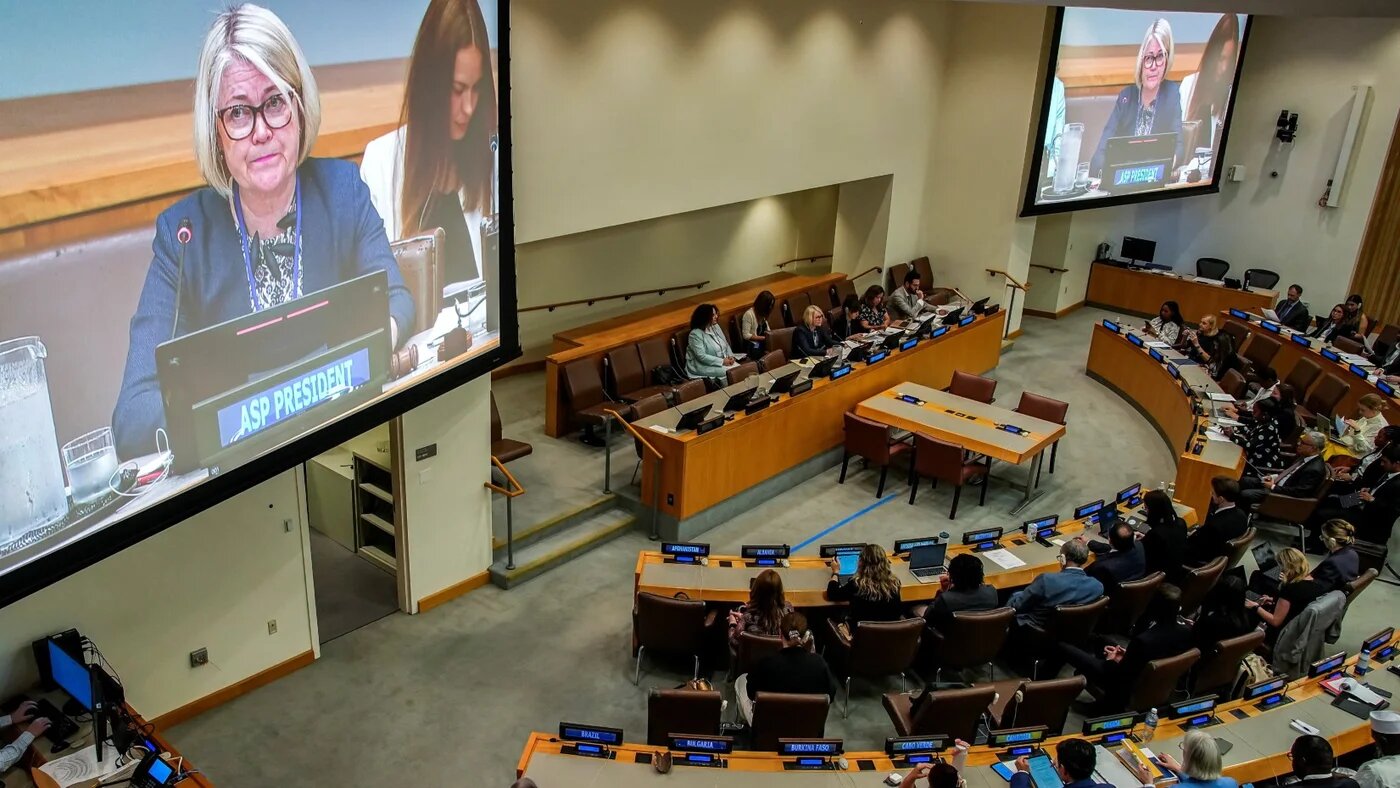
The Assembly of States Parties to the Rome Statute gathers in New York on 24 July to vote on Karim Khan's removal (Reuters)
International law professor William Schabas has expressed his concern over the independence of the next prosecutor of the International Criminal Court following the controversial removal of Karim Khan by member states after an 18-month long misconduct probe.
The Assembly of States Parties (ASP), the ICC’s governing body, voted on 24 July to dismiss Khan after deciding that "the elected official... committed serious misconduct and a serious breach of duty" by engaging in "prohibited conduct against a subordinate staff member".
The opinion was contrary to the conclusion reached by the judicial process established by the bureau - the executive body of the ASP - to make a legal determination on a United Nations fact-finding investigation that outlined the evidence from the complainant, Khan and more than 30 witnesses.
In March, the panel of three judgesappointed by the bureau concluded unanimously that the facts presented in the UN probe did not establish any wrongdoing under the relevant legal framework.
The July removal vote was based on the recommendation of the 21-member ASP bureau a month earlier that effectively disregarded the judges' panel opinion, finding instead that Khan committed “serious misconduct” by engaging in a sexual relationship with a subordinate. Khan has denied any wrongdoing.
The bureau has also amended the voting rules to lower the threshold for Khan’s removal, from a two-stage vote - in which members would vote separately on whether Khan had committed misconduct and whether he should be removed from his job - to a single vote.
'Great harm has been done to the court in general and to the independence of the prosecutor'
- William Schabas, Middlesex University
The bureau’s decision and its handling of the investigation have been widely scrutinised by rights groups and legal experts, particularly over concerns that the process had been “politicised” and inconsistent with due process.
“The ASP is a political body. Delegates vote on issues in accordance with instructions from their governments,” Schabas said.
“A determination by the ASP that ‘serious misconduct and serious breach of duty’ has taken place is an inherently political one,” he added.
“The ASP adopted a decision that refers to various sources of evidence that it says were considered. It is not a proper judgment. It is not a judicial decision. It does not indicate what was believed and what was disbelieved by members of the ASP.
middleeasteye.net › icc karim khan saga timeline The Karim Khan saga: a timeline
Schabas also noted that the ASP’s decision “does not identify the specific act or acts that constitute ‘serious misconduct and serious breach of duty’”.
He added that while some states may have voted against Khan due to their genuine belief that he committed misconduct, in particular following the CNN interview with the complainant, others inevitably voted based on political considerations.
“Undoubtedly,