The World’s Silence On Gaza Once Headlines Fade
The World’s Silence On Gaza Once Headlines Fade
Vijay Prashad, Tricontinental Institute for Social Research (thetricontinental.org › silence on gaza).
The tapering off of news coverage on the US-Israeli genocide has done little to abate the violence.
In fact, its permanence is precisely what allows the world to look away.
Some catastrophes disappear because they end. Others disappear because they continue for so long that the world grows accustomed to them. They cease to interrupt television schedules and Instagram reels, just as they no longer command the front pages of newspapers. Financial markets return to their ordinary calculations, the daily machinery of political and economic life resumes its familiar rhythm, and diplomats are asked to put away their briefing books on that tired but painful subject. Yet, the catastrophe remains intact: the US-Israeli genocide of Palestinians in Gaza has not disappeared because of a new peace but because the permanence of the genocide makes it unmarketable news.
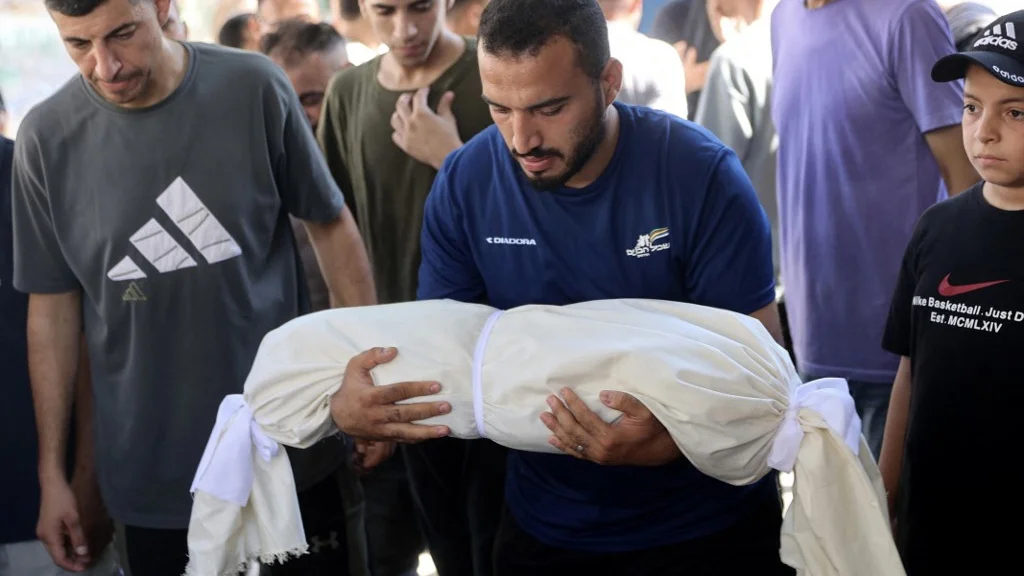
There was a time when every explosion in Gaza flashed across my phone – horrible images of children being pulled from rubble, medical workers trying to help patients as the hospital itself gets bombed, and families howling in grief as Israeli bombs obliterated entire Palestinian lineages. Israel’s attacks continue as families flee from one temporary shelter to another and children search through shattered concrete for fragments of lives they once knew. But the world’s attention has shifted elsewhere as the genocide has become routine. We have become comfortably numb.
The scale of death and destruction is impossible to comprehend. The Palestinian Ministry of Health reports (english.wafa.ps) that since October 2023, Israeli violence has killed at least 73,221 Palestinians (half of whom are women and children (breakthroughnews.org › when the children become the target)) and wounded 173,654 others. By February 2026, at least (unicef.org) 21,289 children had been killed and 44,500 injured in Gaza. Even after the so-called ceasefire took effect on 11 October 2025, Israeli violence has killed 1,100 Palestinians, including at least 260 children, and injured 3,546 others. That means that, on average, the Israelis have killed four Palestinians every single day since then.
There are moments in history when words lose their meaning. Not because dictionaries are rewritten, nor because language itself changes, but because political power empties words of the realities they once described. The word ‘ceasefire’ has increasingly acquired this desolate quality when used by Israeli and US officials. What was once understood to mean the suspension of violence, the silencing of guns, and the creation of political space for peace has become something else entirely: a managerial term for the continuation of bombardment, displacement, siege, and military control in the name of peace.
Statistics attempt to quantify the horrific destruction, but numbers cannot capture absence. Behind every number lies a family with a broken history and a child who will always remember a home that no longer exists, or, in many cases, an entire family lineage erased. These figures are horrifying enough on their own, as reflected in United Nations Relief and Works Agency for Palestine Refugees in the Near East (UNRWA (unrwa.org)) reports, for which a donation (donate.unrwa.org › general) is overdue. Each report from the UN reads less like an emergency bulletin and more like an archive of permanent catastrophe.
What is the meaning of outrage when it seems to carry no political cost for Israel’s total violation of international law? Beyond the ruins of Gaza, the map of Palestine continues to be rewritten in the Occupied West Bank and East Jerusalem. Not a day goe
Part of an ongoing event
Israel-Hamas Conflict